He obsessively brushed his teeth every day.
He did this because he knew many people in his life who did not brush their teeth daily, and he found this habit abominably disgusting. So every morning, as soon as he woke, and right after he urinated, he furiously put brush to tooth and scrubbed until his gums nearly bled. He usually awoke with a fierce erection, making his flight to the bathroom even more urgent. He was terrified of someone noticing his erect penis, standing proudly outside his body, parallel to the floor, and sometimes had to walk with a hunch or abruptly turn around and pretend he meant to be heading in an opposite direction if he encountered someone in the hallway, already up before him.
This was part of his ritual, which, in his mind, helped define him and bring his entire sense of self into focus. He believed he was the sum of all the things he did, which was unfortunate, because he did not do much. He was a college student, but he neglected his studies. He was a writer, but he neglected the page. He was unemployed and terrified of labor, avoiding it at all costs. Thus, as he was not a very productive person, he felt that his identity was slowly slipping away, or perhaps being taken from him, because he was not entirely sure why he was so inept. To put it simply, he believed he was not capable of doing things that other people did.
Of what other people actually did he was not entirely sure, because he did not yet, in his formative age of twenty-one years, understand the meaning of life, so to speak. Whether it was to work and die (the thought of which petrified him), or form close personal connections with others (which seemed extremely difficult), or get married and have children (which eluded him because of his sexual preferences), or create art (which he was not convinced he was capable of doing either).
In the end, he settled on becoming a consumer. And consume he did.
He gorged himself on fiction and literature, absolutely devoured electronic entertainment, and spent hours transfixed in front of the television. The arts soon came to define who he was, and he found he was nothing more than the sum of the things he was consuming. This was just as distressing as his innate lack of productivity, and ultimately did nothing to help secure his place in the world. He still felt as though he were drifting through time and space, selfishly taking all that he could while giving nothing back.
He was a chronic masturbator, although not because he was sex-deprived. Whenever he had sex (or whenever he ejaculated, period), he felt a deep emptiness afterward that the ecstatic sensations he had just delighted in had not filled. This was not conducive to maintaining a loving relationship with someone, intimately or otherwise, and so he was ostensibly all alone. Masturbating, however, the act itself, frequently made him feel, in the doing of it, that he was getting closer to God, or some mystical force that controlled everyone and everything by subtly manipulating the strings, like some puppeteer of pleasure, and that, while he was doing it, he could almost feel the direct tug on his own invisible strings, the ones that somehow, when wound all together, formed a vast tapestry that he supposed could be called his soul. He was also entirely convinced that absolutely no one else felt this way, so he shared these thoughts with no one.
He frequently wondered whether other people were happy. He liked to imagine that they were, but he was never quite sure. It comforted him, in a bizarre way, to think that there was some magical formula to being happy that he just hadn't discovered yet. Perhaps this being happy, this imaginary thing, was the key to self-identification that he was missing. He began to think that maybe he was not himself, but rather someone else, and that all his attempts to become himself had failed so miserably because he was not, in fact, himself, and could never be himself. But he did not know how to be anyone else other than himself, and since he despised himself and his consuming nature and his existential crises, he felt that his self was most definitely being sucked into a black hole of nothingness and that his entire self was actually made of nothing, that nothingness had somehow become substance, and it was so all-encompassing he could almost reach out and feel it, feel the nothingness flowing through and of him.
So if he was not himself, then who could he be? It suddenly dawned on him that he was me, and I was him, and this startling revelation was so incomprehensible, the ramifications so unfathomable, that he exploded. And all the tiny pieces of himself went spiraling through the time and space of nothingness, and landed squarely in my lap, and I thought to myself how unfortunate that I should be so unlucky as to be this poor sap.

03 May 2013

12 April 2013
Time Out
What is everyone's fascination with drugs? Specifically, marijuana. That's what we're talking about here.
I've been a staunch anti-drug advocate for most of my adult life.
Which isn't to say I've never smoked, never tried it. I have. Numerous times.
I just don't get it. I'm a reasonable guy, smart, rational (to an extent), and pretty open-minded. But I never have, still don't, understand people's fascination with marijuana.
Frankly, it's fucking stupid. Come at me.
That's right. I said it. It's stupid, and pointless, and a waste of your time and money. It smells like shit, it doesn't make you smarter, or more fashionable, or more creative.
I grew up with stoners. My friends in school were stoners. My mother was a stoner for a while. I live with stoners. What I mean to say is, I'm not like completely ignorant of this stuff. I see what it does to people. I'm experienced. I just still don't get it.
And frankly, I'm tired of all the people pushing for legislation to make pot legal. What's the point, honestly? Think about it for a second. Don't misunderstand, I've heard all the arguments before, and I already know what everyone will say. But taxes. But liberty. But freedom. But happy. But feel-good.
But I don't care, honestly. About taxes, or your liberties, or what makes you feel good. I don't care if alcohol is more dangerous, more addictive, or more deadly. I don't care about any of that.
I never have and I never will.
The truth is, if you get high, you and I will never have a close, meaningful, real relationship. Not the way I will with a sober person. It's just not possible. We are leagues apart, might as well be living on different planets. You engage in something that I literally do not comprehend on the most fundamental level, and that makes it pretty hard to relate. It's like knowing someone, and talking to them, but you're seeing them from across a gulf.
And I know it's not a gateway drug, and that it won't kill you, and that you aren't becoming more violent or aggressive. I still don't care, and I don't get it. I don't like it.
So why bother writing about it? Because it plays such a prominent role in my life. I never wanted it to, but it does. And I hate it. I'm around drug dealers and stoners every day. It robs them of their ambition. It inspires laziness. It discourages productivity. It renders deep, meaningful conversation impossible.
That's what it really boils down to. I like talking to people. I like getting to know them, probing their minds. Seeing what makes them tick. It's sort of my job. But a high person has no depths to plumb. It's like unscrewing someone's head, all giddy with excitement, then finding...nothing inside. There's nothing to talk about.
Don't get me wrong, I'm not that bitter. Do your thing, do what makes you feel good. I'd just prefer you didn't do it around me. Because I don't like it.
So again I ask, what's the big deal anyway? It's more of a rhetorical question. I don't actually want to know, nor do I care. Every answer everyone has ever given me is the same regurgitated, tired bullshit. Everyone keeps imagining this golden future with weed everywhere, on every street corner, at your local pharmacy, cops winking at you from across the street. A whole population united together in smiles and munchies and good will.
That future scares me. I hate that future. I don't want to live in it. Imagine the opposite for a second. Just for a second.
Imagine a future with no drugs, ever. Everyone's just the way they normally are all the time, perfectly clean and sober.
Would it really be so bad? Would that be such a huge deal?
Actually, what if instead of getting high, you just didn't get high?
Don't bother answering.
07 April 2013
Tournament of Lies
Pure laziness...
Back
to Channel Five news. “Our main story tonight: deadly killer strikes again,
claiming another victim last night. Police say the man, 32 year old Calvin
Trank, was found floating in a small creek behind his apartment on the east
side of town, genitals mutilated and removed…”
Flip. “A new study indicates suicide
rates are skyrocketing in America, especially among veterans, and now is the
number one cause of death by injury…”
Well that was certainly
disheartening. What on earth was happening to people? Jeffrey could hardly make
sense of all this craziness. He pushed a button and landed on more news. News, news, news, he thought. I’m ashamed to be a part of this. Hell, I’m
almost ashamed to live in this country anymore.
Almost.
“A local middle school teacher was
arrested this afternoon on charges of exposing himself to his students in the
middle of class. Sources tell us Mr. Michael McKenzie pulled down his pants and
was wearing, quote, ‘A bright red thong.’ The district superintendent could not
be reached for comment.”
Switch.
“Today police raided a known meth
lab in a downtown neighborhood…”
Jeffrey pushed his tray away from
him and stuck one finger in his ear, then ran a hand through his thinning brown
hair. Dandruff fell like snow from his scalp and dotted his black button-up
shirt. He got up to throw away his empty tray, the trash can in the kitchen
overflowing with refuse. Two flies landed on an empty beer bottle and promptly
shit on it.
Switch.
A music video was playing. A large
pair of voluptuous tits bounced on the screen, liquor pouring down them in
slow-motion. Disgusting.
Flip.
“…and the authorities have no known
suspects at this time.
Flip.
“Two students walked in and opened
fire this morning with a 12-gauge shotgun, killing five people and wounding…”
Jeffrey stopped. “Well that is
awful!” he declared. He felt sorry for all the dead students. He changed the
channel again.
“Another baby was found in a dumpster
this afternoon; authorities were called after…”
He banged his fist on the dinner
tray. “This is a disaster!” he bellowed. He felt sorry for the dead baby.
Flip.
Glenn Beck.
“This is a fucking outrage!” he
screamed. He felt sorry for everyone.
Jeffrey stood up and turned off the
television. It was like this every evening. He could only take so much. I need a sandwich, he decided.
Jeffrey walked into the kitchen and
opened the refrigerator, the bright glow illuminating a series of dismembered
penises dangling from hooks, which he brushed aside, and grabbed the
mayonnaise. He really did feel sorry for everyone.21 March 2013
Lenny Bruce Is Not Afraid
It was a dark and stormy night.
Or, at least, that’s what the news report had said. Jeffrey couldn’t hear any rain outside, so the weatherman was probably wrong. Motherfucker. He was always lying. To Jeffrey, to everyone.
In fact, it wasn’t even really nighttime. The sun was just now dipping below the clouds. It was more like twilight. But Jeffrey had all the shades drawn, aluminum foil taped to the corners of his windows and large black curtains that wrapped around the blinds. His apartment was entirely dark. He lived up on the thirteenth floor, but you couldn’t tell.
It was like a dungeon.
It was furnished about as extravagantly as well. A single folding chair sat in front of an old television set. This was the kind from before high-def had become all the rage. Jeffrey missed those days. He didn’t know what the fuck a pixel was or how many he was looking at, and he didn’t care.
He also didn’t care for digital cable, so he had had one of those converter boxes installed after the switch a few years back, and the antenna was tucked neatly behind one of his curtains, right up against the window, where it could receive enough signal to at least get the local news.
So that’s what he watched. Every evening. The local news.
He peeled the wet plastic sheet off the top of his microwavable dinner. This was all Jeffrey ate. Behind the chair, which was in front of the TV, in his studio apartment, was a small kitchen counter with a window, which wrapped around in an L-shape and had a single microwave oven sitting next to his convection oven, which he never used. At the end of the counter was his refrigerator, which held only microwavable dinners in the freezer.
Jeffrey didn’t go grocery shopping often.
“And so, authorities spent nearly three hours attempting to remove the woman from her apartment, where she was promptly taken to the hospital and subsequently died when she stroked on the operating table.” The newswoman straightened a pile of paper on her desk, and then smiled at the camera.
Her co-anchor, a man named Dan, “Dapper” Dan on Channel Five!, looked over at her. “Wow, what a large woman,” he quipped, attempting to fill the dead air between stories. Jeffrey rolled his eyes.
“Yes, she is rather rotund,” Diana replied, wearing a large plastic smile.
Jeffrey huffed and spooned a large helping of watery mashed potatoes on to his spoon and shoveled them into his mouth. He swallowed loudly. This was pathetic. He couldn’t believe the shit they put on the news nowadays. He grabbed the remote sitting on the arm of his chair and adjusted the tray sitting in front of him, then pressed the CHANNEL UP button with one of his sausage-like fingers.
The TV landed on some reality show where peopled are candidly filmed ordering fast food in a popular restaurant, and when their meal is ready the cashier, a celebrity in disguise, throws the food in the patron’s face and laughs hysterically as the cameras capture their shocked reactions. Jeffrey didn’t much care for this show.
It seemed like a waste of good food.
He flipped the channel again.
Entertainment news now. Jeffrey sighed again, and grabbed the over-nuked brownie from the plastic tray and popped it in his mouth whole, chewing with his mouth open and working the rubbery chocolate into a malleable, swallowable material.
This was garbage. Nothing but attractive, overpaid people telling you about more attractive, overpaid people, and how much you needed to be more like them. Jeffrey hated celebrities.
They fucking disgusted him.
“Tupac sightings in Chile today, and then later see what Tom Cruise said when our cameras caught up with him! But first!” And then there was some video of a paparazzo running up to some other celebrity in the airport. They started to say something. “Go fuck yourself,” was the quick response.
Jeffrey nearly choked on his brownie. This shit counts as news, now? Dear Lord, he thought. Save us.
Jeffrey didn’t have a girlfriend. The main reason why is that the last girl he was with kept telling him to be quiet when the entertainment news was on.
28 February 2013
POV Experiment, Concluded: The Session
I grew up in a pretty average
suburb, sandwiched between the hustle and bustle of the big city and the rural
farmland beyond; an affluent neighborhood marked by a delicate stream cutting
through the middle, the culvert of which all the kids loved to play near and catch
crawdads, and looping cul-de-sacs that tucked into lovely corners of foliage
and shrubbery, with great looming elms that provided scattershot shade on
Spring days when the wind ripped through the streets and shuddered their
leaves.
The neighbors were decent, I
suppose. I never got to know them. I spent the majority of my time either
indoors or riding my bicycle by myself, tracing huge figure-eights through the
concrete mazes. I could recall, suddenly, a time during one of those trips that
I came across a dead bird. It was a huge, ugly thing, sitting in the middle of
the road. It was off one of the backstreets in the northwestern corner of the
neighborhood, where the sidewalks were cracked and torn up, and most other kids
avoided coming back here, afraid they would fuck up their tires.
But there I was, in front of this
dead bird, and I had slammed on my brakes and half-stood, glaring at the thing,
one leg balanced on the pavement for support. I could see its guts and innards
glistening in the Summer heat, but the corpse itself was devoid of maggots. A
grounded electrical box housing circuits for the streetlamps that lined the
circle sat tucked slightly up into the yard of the nearest house, which was
somewhat sloped and extended a good twenty or thirty feet. For no particular
reason that I can recall, and lacking any explainable motivation whatsoever, I
decided that the bird needed to be buried. I shook loose the plastic housing on
the electrical box, and, disregarding the risk of diseases and cootie-contamination,
dropped the carcass into the soft, cool earth below, right next to a lot of
scary-looking equipment I didn't know anything about.
I placed the cover back on top of
the unit and stared at it for a second, before turning tail and pedaling home
as fast as I could.
"Was that your first sexual
experience with a male?"
"Hmm?" I shook my head, my
train of thought derailed. What was she talking about? Oh, right. "Haha,
no. Not really. I mean, I had touched another boy's penis before. It was my
first time ever getting caught like that though."
She nodded thoughtfully. "Did
your parents ever find out?"
"Thankfully no. Or if they did
they never let on." My hands felt clammy and cold. "I don't know what
would have happened if they'd found out."
Silence. Rain began to splatter the
window outside, clouds moving in from the west.
"There was this one time, when
we were watching television, and my dad had control of the remote. All of us as
a family. But dad always decided what we watched." I could feel the terrible,
crushing weight descending again. All of these memories were like throwing more
bricks on the pile. "One night he had stopped on Will & Grace for only
a second, flipping through the local channels. And he said 'fuckin queer shit'
before moving on." I looked out the window and empathized with the rain.
Destined to fall and disappear. "That always scared me."
"Did you have any other
experiences when you were younger?"
My stomach did a somersault and I
forced myself to calm down. "Do we have to talk about this?"
She shook her head calmly. "You
don't have to say anything you're not comfortable with. But Brendon, let me
assure you, this is a safe place. Nothing leaves this room."
"I know that, I'm not fucking
stupid," I snapped.
She closed her mouth abruptly.
Another awkward silence.
Finally she ventured forth again,
perhaps realizing I wasn't going to take the initiative. "It sounds like
you haven't really accepted yourself."
"What is there to accept? A
life of loneliness, guilt, regret? No, I don't accept that. Who would?"
"Brendon, homosexuality is
perfectly normal."
"You wanna try it some
time?" I grinned sardonically, then let my smile drop. "No, didn't
think so. Pardon me if I don't accept your well-thought out opinion on the
matter."
"I can see why someone would
have that idea if that was their only experience, being that it was so..."
"I never said that was my only
experience," I interjected. Another moment passed. I bit my lip. "Gay
men are like animals. Whores with no sense of decency. Right after I turned
fourteen, there was this other guy. We met in phys ed. He was sort of a jerk,
but we had similar taste in music. And we both hated phys ed." I laughed
mirthlessly. "So we had some common ground. But anyway we finally exchanged
numbers and we started hanging out."
More nonjudgmental looks. I forced
words to leave my mouth. "I was starting to feel like one of the normal
guys. I had a best friend." Agony began to drip from my bones and flow
through my veins, and my heart threatened to contort into some unbearable
shape. "One night he came over to my house and asked me if I smoked. I
said no. Then he surprised me by taking a cigarette out of his pocket and
gesturing for me to follow him outside. I thought smoking was disgusting, but I
also thought he was cool. At that moment, I would have followed him to the end
of the earth.
"So he lit up and passed it to
me, told me to hit it. I had no idea what he meant, but I did my best. Hurt
like a motherfucker. Anyway, that's not important. All I knew was that I had
gained his acceptance. Or respect. Or whatever.
"It wasn't too long after that
he asked if I had ever had my dick sucked."
Raised eyebrows. More folded hands.
"I told him no, and then asked
if I had ever sucked a dick. Same answer. And then he said he wanted me to suck
his dick." I gripped the arm of my chair and tried not to grit my teeth.
"I don't think in that moment I could have said no...I didn't want to say
no. Goddammit, but I didn't want to say no."
And the tears came again.
♦
"Brendon,
I understand how difficult this is. But it's becoming clear that a lot of this
pain you're feeling is a result of extreme denial. And the longer you dwell in
this stage of denial, the worse you're going to feel.
"A lot of people come here,"
she began clasping and unclasping her hands, eyes darting around the room, as
if she were conducting her reasoning on the fly, but she sounded clear and
confident, "they feel depressed, and they want medication prescribed to
them. Quite frankly I don't think that's the right path for you." Well,
nevermind. In that moment, I hated her. Denial? Of course I was in denial. Why
wouldn't I be? "I think if we worked on this," she stared hard at me,
"just this, you would begin to feel a lot better."
"So you can cure me?" I
began to feel hopeful. Maybe there was a way out of this after all. I wouldn't
have to constantly swim against the current, instead I could let go and flow
with it.
She stopped short again and frowned.
"Cure what? Depression? That's not exactly how that works. See, depression
is treatable..."
"No, I meant fix the gay."
Blank stare.
I said nothing.
Silence hung in the air like a dense
fog, impossible to see through or penetrate.
I went back to visit that dead bird
day after day for over a week, pedaling through the streets like a madman,
ignoring the catcalls of the other neighborhood kids, who were undoubtedly
curious as to where I could possibly be heading in such a hurry. I would throw
the kickstand down and kneel beside the electrical box, carefully removing the
lid, almost reverent of its contents, like performing a sacrament. I observed
the bird's carcass through several stages of decay: first, the feathers all
fell off, revealing muscle tissue and skeleton underneath, then the eyes
disintegrated and I could see the empty skull underneath. Internal organs
quickly rejoined the earth, ashes to ashes. Miraculously, few maggots and other
insects (other than flies, of course) feasted on the corpse, so I never felt
too icky constantly peering within. Finally, after a long while, I came to see
the bird one day and it was almost completely gone. The entire thing; bones,
muscles, skeleton, guts, marrow and sinew, blood and all, had been devoured by
the soil. On that final day, I gently tossed the plastic cover aside and sat
down on the warm grass, hugging my knees to my chest. I pondered what had
happened inside that box, and even at that young, somewhat naïve, highly
impressionable age, I immediately understood the earth-shattering implications
of what had happened to that bird, and it rocked me to my core. The inside of
that box had become a microcosm of our entire world, that bird was me. And my
mom. My dad. My sister. Everyone I had ever met or will ever meet. Our lives,
in the grand scheme of things, were absolutely and completely meaningless. We
lived, we died, and in the end we all go into the dirt. Nutrients for whatever
was to come next. No one would remember that bird except me. None of his little
bird-brained friends or relatives were wondering where he was, or if he was
okay. You can dress up death all you want, it doesn't change the fact that when
you die, the earth keeps fucking spinning, and all its natural processes refuse
to stop, and you are nothing if not in service to that infinite schema.
All of a sudden my sister was upon
me, a large shadow looming over my private funeral. I jumped. "What the..!
What are you doing here?" I asked her.
She towered over me despite being
almost three years my junior. Looking up at her only increased the illusion of
smallness that I felt inside. "I should ask you the same thing," she
replied, crossing her arms.
I quickly stood up and tried to
stand in front of the electrical box, shielding my shameful, voyeuristic
experiment.
She didn't buy it and quickly pushed
me aside and knelt down. But there was nothing inside left to see anymore.
"What's going on here?" she looked up and narrowed her eyes.
"Nothing. I was just goofing
around. We should leave before the neighbors catch us," I said quickly,
running a hand through my hair.
"Are you alright?" She
rose and studied me closely.
"Perfect. Totally."
"You're a bad liar."
"And you're a nosy bitch."
She smirked. "Yeah, you're
fine. Whatever. Let's go home. Dinner's almost ready, by the way. Mom wanted me
to tell you."
I continued staring straight at my
therapist, slightly confused. "What?"
She shook her head. "Brendon,
there's nothing wrong with you. Homosexuality isn't a disease, or a condition.
We don't 'treat' it. You must come to
terms with that. That's what I'm trying to tell you."
I wanted to pick up her furniture
and throw it. I wanted to rip up the pictures of her family sitting on her
desk. I wanted to grab her stupid hair and slam her head onto the desk and
scream in her ear. I wanted to run to the window and jump out and let the cool
rain splash me on my face before I splattered on the concrete. "You're
lying. If there was nothing wrong with it, then there'd be nothing wrong with
me."
"Let me ask you a
question," she said slowly, trying to smoothly change the subject.
"Are you a virgin? Have you ever actually had sex with a man?"
My breath caught, and I forced
myself to swallow a lump that rose up in my throat. I averted my eyes. "I
can't," I whispered.
My therapist looked incredulous, but
quickly reassumed her composure. "Why do you say that?"
"How can I? This is what I'm
trying to tell you," my voice rising, "I'm not supposed to do it. I
can't do it. ...Gay sex," I spit the phrase, "is unnatural. Men's
genitals aren't supposed to go inside men's anuses. Our bodies...our minds
intuitively realize this. So they prevent us from doing it naturally. I can't
do it." I began to trail off, feeling lightheaded and fatigued.
"Brendon, I'm not entirely sure
what you're talking about, but I think we need to discuss this further. I would
like you to come again next week..." she quietly pulled out a slip of
paper from a desk drawer and began scribbling on it.
"I'm not leaving yet," I
moaned. "What don't you understand? Sex is like calculus to me. It doesn't
work."
She put her pen down. "What do
you mean, it doesn't work? Have you never slept with a man? Are the only
experiences you've ever had ones where men were using you?"
I recoiled. "Tyler didn't use
me!"
I didn't realize I had shouted. I
blushed furiously.
"Who's Tyler?"
I said nothing.
"Brendon?"
Tyler
was the only boy I ever had real feelings for. I don't mean sexual feelings. I
mean...he made me horny and everything. But a lot of guys did that.
No, Tyler was special. I liked him.
A lot.
Tyler liked me too, but I never told
him. So he never knew. He never told me he was gay or that he liked boys, but
there were signs. I played coy. We were both eighteen and inexperienced, it was
cute in a way. But as much as the chase thrilled me, I was also disgusted. I
was terrified of Tyler at the same time I was falling in love with him. He had
a perfect bowl of black hair on his head that came down just past his ears and
arresting green eyes. Sometimes he would catch me staring at him in class and
smile, showing his teeth. It was wicked. His grin could disarm a highly trained
assassin.
Yes, he was my first real crush.
I finally decided to come out to him
one night after a round of heavy drinking. I broke into my parents' liquor
cabinet and chugged a fifth of low-proof rum. Although I eventually threw it
all back up and went to bed with a spiraling headache, I made one call before I
lost consciousness.
It was to Tyler.
He took the news pretty well, and
although he didn't say anything back regarding his own sexuality, I could tell
he was pleased. Maybe even a little relieved. "I just want you to be
happy," he said.
From then on, we were inseparable. I
had a new best friend, and this one wasn't going anywhere. We would talk to
each other over the phone for hours at a time, often until the sun came up. We
would walk to each other's houses in the middle of the night, crawling through
windows and watching TV in dark rooms, giggling in the white glow. We would
play videogames nonstop, until we either had to eat or pass out. He liked all
the things I liked. I liked all the things he liked.
I liked him most of all.
Finally we decided to go to bed
together.
"It was a complete
disaster." I told my therapist everything. "I couldn't do it. I was
so embarrassed, and afraid he would never talk to me again. I was afraid I was
ruining everything we had. That's when I figured it all out. From that moment
on, I knew. My lifestyle...this thing," I winced, "it's unnatural.
It's not right. And I fucking hate it!" I wanted to shove myself backwards
in the chair, distance myself from her as much as possible. Instead, I pulled
my legs up and hugged my knees.
"Brendon," my therapist
said sternly, "you did not do anything wrong. Look at me now."
I looked up, every muscle in my neck
straining for purchase. It felt like a rusted wheel grinding over.
"You did not do. Anything.
Wrong."
"Then why didn't it work! Why
does this never work! I just want it out of me!" I sat up, shouting. I
stomped my feet on the ground. I felt like an infant.
"Have you ever stopped to
think," she said matter-of-factly, "that maybe the reason you're
having so many problems with sex is that you refuse to accept your own
sexuality? You're right, these two conditions are connected. But your order of
causality is backwards. If you want to have fulfilling, rewarding sex with
someone you love, you have to accept
that part of you that loves that
other person from the inside. You can't keep fighting it, otherwise these
feelings are only going to get worse. And you will never have a healthy sex life, with men or women. Does any of this
make sense?"
I stared off, stunned. The pathetic
thing, the truth, was that everything
she said made sense. I was just too stubborn and stupid to see it before. For
all my intelligence and test scores and "gifted classes," I wasn't so
smart after all.
"Do me a favor, because
unfortunately we do have to wrap this up, and I do want to see you in here next
week, but do me this favor. Think back on those nights you spent with Tyler.
Remember the sights and sounds. How did it feel? How did you feel back
then?"
Immediately I could remember the
train roaring past his house, the cramped space in his bedroom with the TV, the
couch, and the bed. Most of all, I remembered his smile. If only looks could
kill, he would have murdered me over and over. And I would die happy each time.
There...that was the key: I was
happy. For at least some part of it, some brief moment, I was happy with Tyler.
I looked up at the old woman scribbling on a paper on her desk. "I was
happy."
She stopped and looked up, then
smiled. "Good. Remember that. Focus in on that. Take this slip to the receptionist
at the front desk, she'll get you rescheduled. I'll see you soon."
I went to the door, prepared to
leave.
"And Brendon?"
I stopped and turned around.
"Don't give up."
♦
I
collapsed into a booth in a small diner on my way back home, feeling like I'd
been turned inside out and scraped clean. A weird sense of anxiety still
dwelled in the pit of my stomach, but surrounding it was a new warming glow of
calm. I sought to stoke it. I decided coffee was the best bet.
The waiter came by after a moment
and asked what I wanted, and as I looked up, I noticed a young man with dark
hair and a hollow-point smile, and the horn of a train sounded outside.
24 February 2013
Das Racist
With the 85th Academy Awards airing tonight, some questions loom large in blogosphere about race and how its being handled both on the big and small screen. To boil some of these arguments down, the popular agenda being touted seems to be "If you're white, you can't make a movie about black people." And, by extension, if you're white, young, and wealthy, you can't make a television show about being young, white, and wealthy.
Which is completely ridiculous, of course. I'm shocked that these arguments are being dusted up in a post-Great Recession, current-Obama era America, where people should be at least a little more in tune with how things are and how they're shaping up to be. Look at Girls, a popular show on HBO about, well, girls (specifically, young white girls who have [or, more accurately, used to have] money).

The show was created, stars, and is written by one Lena Dunham (who may, at this point, be arguably more or less famous for dating that guy from Fun.), who is white, young (26 to be exact), and somewhat privileged. I say "somewhat" because, as was hinted at earlier, I think it's safe to say that our distinctions of class, welfare, and wealth are far more complex and multifaceted than they once were in light of the so-called "Great Recession." The middle class, for all intents and purposes, has been completely obliterated. It no longer exists. Feel free to argue that point, I don't have hard facts and statistics (not for the purpose of this post, anyway), but it seems apt. Now, noted basketball star-turned-self-congratulatory-critic Kareem Abdul-Jabbar would like to tell you that Lena Dunham and her show should be spurned for its foolhardy attempt to be the voice of a generation (as he invokes, in the same breath, Bret Easton Ellis, which is also debatable on its own merits) as it does not understand the current cultural climate as it exists. Why? Because Lena Dunham is white, her show is about white people, and her and her white characters are all rich. Or entitled. Or whatever the fuck retarded word you want to throw in there. They should feel guilty that they have money and that their worldview is dominated by people who look like them.
This isn't the first time this criticism has been levied at Dunham. Other critics early on during the show's first season complained that Girls was racist because it featured no black characters. Dunham has tried defending herself against this on multiple occasions saying that she wants to write what she knows, something authentic, that speaks to a very real and relatable experience, and to squeeze black characters into that would be disingenuous. She doesn't know the black experience, and therefore cannot write it.
So why do other shows feature black characters? Oh, I thought the answer to that was self-evident... they have multiple writers. Any regular drama you find on television (including other shows on HBO) have entire teams of writers that work together to come up with plots, character arcs, dialogue, etc. It's a team effort. They can pool together their collective knowledge to let the show address all sorts of different things. Girls is no such show. It has a single writer, a single voice. And that voice is strong. And it should not be discredited for that.
As for the characters being too privileged, I think some context should be applied here. In the first episode of the series, the main conflict for the protagonist is established: she has a college degree but no real way of using it, no real skills or job prospects, and her parents have just decided to stop supporting her. Thus the drama unfolds. Abdul-Jabberwocky and other critics would like to argue that this is evidence of stuck-up, assholish characters that we shouldn't celebrate and shouldn't enjoy watching. But newsflash: this story is more common than you think. There's really no other way to refute this ridiculousness than by saying that Dunham is absolutely right here. She has captured the zeitgeist of a new generation of young people who got fucked by the collective toilet-flushing the country has gone through (and continues to go through). Making money, going to school, getting a job: none of these things are as easy as they once were. And, not to devolve into semantics here, but just because the main character's parents have money does not mean she has money. Sins of the father and all that. And, even more semantically involved!, is the fact that by today's standards of wealth, her parents can hardly be considered rich stacked up against the actual 1% of this country. They are merely fortunate, and products of a bygone generation that includes my father and my friend's parents as well. Maybe I'm too "white" and "privileged" to say this, but upon watching the first few episodes of Girls, I was hooked and I'm not even the show's target demographic.
In case that didn't sound disjointed and hackneyed enough, we still have a few other topics to hit before I'm done for the day. Like I said, the 85th Oscar ceremony will be held tonight and one of the buzzwords that's been thrown around this award season is "racist." This storm actually started way back in December when Spike Lee infamously claimed he was boycotting Tarantino's new film "Django Unchained" and basically called the director racist for taking creative liberties with a story that dealt with slavery (not limited to, but definitely including, use of the word "nigger"). What Spike Lee fails to realize about Tarantino is that he's actually the complete opposite of a racist, despite the fact that he sometimes appears on BET and inserts his foot into his mouth, probably on account of being so jumpy because people keep calling him a fucking racist. He's collaberated with numerous black actors who have nothing but good things to say about him, he's written movies featuring strong black characters who do not fall into a cardboard stereotype, and he actually just released a film in theaters that deals with the horrors of slavery (the exact film Spike Lee refuses to see for absolutely no reason).

Moving on.
Another critical article published via the New York Times by Nelson George has postulated that the black characters on display in this year's Academy Award-nominated films are too weak in their three-dimensionality to warrant all this praise. He calls out Django in particular, and the depiction of slavery in Spielberg's "Lincoln." Specifically, in regards to "Lincoln" (a fantastic movie, by the way), he calls out a scene in the very beginning that frames Abraham Lincoln as literally above some black soldiers.
 Apparently, this is racist.
George completely ignores the distinct possibility (and likelihood) that this was an intentional choice on the director's part to convey how looking at Abraham Lincoln and seeing him in the flesh must have been like, especially to a young black man who knows that the man he is staring at may hold the future of his welfare in his hands. Gravitas indeed.
George also goes on to explain how the inherent lack of other black characters throughout the movie is counterproductive to its intended message about ending slavery and embracing civil rights, specifically mentioning the lack of a representation of Frederick Douglass on-screen. Let's break this down real quick. One of the reasons "Lincoln" is up for the Best Adapted Screenplay award this year is because the movie was bold and brave enough to suggest that the story of emancipation was a story not just about civil rights and doing the right thing, but a politically motivated gesture. It uses this message to humanize Abraham Lincoln as well as highlight him. He was a great man, but a conflicted man. An imperfect man.
Also, there's an obvious reason other colossal, towering historical figures were not portrayed in the film (like Frederick Douglass): it's about Abraham fucking Lincoln. You know how hard it is to make a movie just like this one, with one central protagonist who was one of our Presidents? The amount of time and effort put into crafting this on-screen presence? The care and nuance of Daniel Day-Lewis's performance? We can't clutter up the movie by shoving all these other people in there. Sally Field as Mary Todd was risky enough, and it was a move that paid off only because Sally Field is a great actress who slides into any role she's given very easily, and she's playing second-fiddle to Day-Lewis, just like all the actors portraying the men in Lincoln's cabinet. They are not central, towering figures from history. We don't even know what they looked like off the top of our heads. Therefore you can cast any actor in that role and it will suffice. It's stock.
But I digress.
George also wants to kneel down and worship at the throne of Spike Lee in his article (and John Singleton), saying that they were the first and perhaps last in a wave of prominent black directors to take up shop in Hollywood. First, let's get one thing out of the way. Spike Lee isn't that great. And Luke Campbell agrees with me. Good? Good. Also, to count Lee and Singleton and one hand and disregard the other black directors working in Hollywood today is pretty hypocritical. Especially the ones that are doing good work (like Antoine Fuqua) and the ones doing horrible work (like Tyler Perry). But it's okay to criticize white directors who mishandle black characters and ignore black directors who mishandle white characters. =P
There's one other problem I have with George's article, and that's the response he has toward Denzel Washington in Robert Zemeckis's most recent live-action film "Flight."

He calls the performance and the character "beautifully rendered," but lacking "moral complexity." This is a complete misread of the film and the character. Anyone who's anyone should be able to look at "Flight" and realize that its depictions of alcoholism, substance abuse, and addiction are ridiculous and cartoonish (see: chugging a bottle of vodka in the car, frantically spiking orange juice in his car, slyly unscrewing caps of vodka behind his back, swiping a bottle of vodka from the top of a refrigerator in slow-motion), but his moral complexity is relatively in-check. He is a detestable man when he drinks, but an admirable one sober. He literally saves dozens of lives in the film, but is destroying his own at the same time. And right at the end, when he's about to destroy the legacy and memory of a woman he loves, he makes the right decision.
This is stretching on a bit too long. To summarize, although the racist argument loves to get dusted up in the media, especially in an awards season such as this one, it's always important to take a closer look at your art, and take what you're hearing from the talking heads and put it in context. Spike Lee and his comments, for example, will always make national headlines. But not this or this.
Which is completely ridiculous, of course. I'm shocked that these arguments are being dusted up in a post-Great Recession, current-Obama era America, where people should be at least a little more in tune with how things are and how they're shaping up to be. Look at Girls, a popular show on HBO about, well, girls (specifically, young white girls who have [or, more accurately, used to have] money).
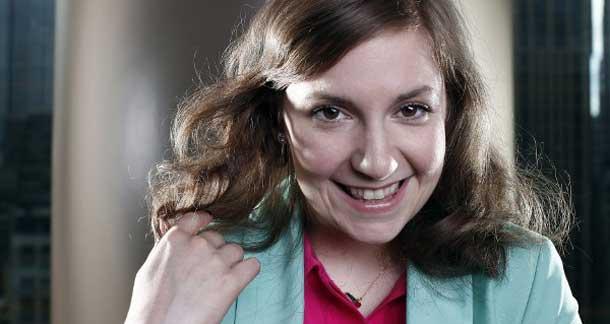
The show was created, stars, and is written by one Lena Dunham (who may, at this point, be arguably more or less famous for dating that guy from Fun.), who is white, young (26 to be exact), and somewhat privileged. I say "somewhat" because, as was hinted at earlier, I think it's safe to say that our distinctions of class, welfare, and wealth are far more complex and multifaceted than they once were in light of the so-called "Great Recession." The middle class, for all intents and purposes, has been completely obliterated. It no longer exists. Feel free to argue that point, I don't have hard facts and statistics (not for the purpose of this post, anyway), but it seems apt. Now, noted basketball star-turned-self-congratulatory-critic Kareem Abdul-Jabbar would like to tell you that Lena Dunham and her show should be spurned for its foolhardy attempt to be the voice of a generation (as he invokes, in the same breath, Bret Easton Ellis, which is also debatable on its own merits) as it does not understand the current cultural climate as it exists. Why? Because Lena Dunham is white, her show is about white people, and her and her white characters are all rich. Or entitled. Or whatever the fuck retarded word you want to throw in there. They should feel guilty that they have money and that their worldview is dominated by people who look like them.
This isn't the first time this criticism has been levied at Dunham. Other critics early on during the show's first season complained that Girls was racist because it featured no black characters. Dunham has tried defending herself against this on multiple occasions saying that she wants to write what she knows, something authentic, that speaks to a very real and relatable experience, and to squeeze black characters into that would be disingenuous. She doesn't know the black experience, and therefore cannot write it.
So why do other shows feature black characters? Oh, I thought the answer to that was self-evident... they have multiple writers. Any regular drama you find on television (including other shows on HBO) have entire teams of writers that work together to come up with plots, character arcs, dialogue, etc. It's a team effort. They can pool together their collective knowledge to let the show address all sorts of different things. Girls is no such show. It has a single writer, a single voice. And that voice is strong. And it should not be discredited for that.
As for the characters being too privileged, I think some context should be applied here. In the first episode of the series, the main conflict for the protagonist is established: she has a college degree but no real way of using it, no real skills or job prospects, and her parents have just decided to stop supporting her. Thus the drama unfolds. Abdul-Jabberwocky and other critics would like to argue that this is evidence of stuck-up, assholish characters that we shouldn't celebrate and shouldn't enjoy watching. But newsflash: this story is more common than you think. There's really no other way to refute this ridiculousness than by saying that Dunham is absolutely right here. She has captured the zeitgeist of a new generation of young people who got fucked by the collective toilet-flushing the country has gone through (and continues to go through). Making money, going to school, getting a job: none of these things are as easy as they once were. And, not to devolve into semantics here, but just because the main character's parents have money does not mean she has money. Sins of the father and all that. And, even more semantically involved!, is the fact that by today's standards of wealth, her parents can hardly be considered rich stacked up against the actual 1% of this country. They are merely fortunate, and products of a bygone generation that includes my father and my friend's parents as well. Maybe I'm too "white" and "privileged" to say this, but upon watching the first few episodes of Girls, I was hooked and I'm not even the show's target demographic.
In case that didn't sound disjointed and hackneyed enough, we still have a few other topics to hit before I'm done for the day. Like I said, the 85th Oscar ceremony will be held tonight and one of the buzzwords that's been thrown around this award season is "racist." This storm actually started way back in December when Spike Lee infamously claimed he was boycotting Tarantino's new film "Django Unchained" and basically called the director racist for taking creative liberties with a story that dealt with slavery (not limited to, but definitely including, use of the word "nigger"). What Spike Lee fails to realize about Tarantino is that he's actually the complete opposite of a racist, despite the fact that he sometimes appears on BET and inserts his foot into his mouth, probably on account of being so jumpy because people keep calling him a fucking racist. He's collaberated with numerous black actors who have nothing but good things to say about him, he's written movies featuring strong black characters who do not fall into a cardboard stereotype, and he actually just released a film in theaters that deals with the horrors of slavery (the exact film Spike Lee refuses to see for absolutely no reason).


Moving on.
Another critical article published via the New York Times by Nelson George has postulated that the black characters on display in this year's Academy Award-nominated films are too weak in their three-dimensionality to warrant all this praise. He calls out Django in particular, and the depiction of slavery in Spielberg's "Lincoln." Specifically, in regards to "Lincoln" (a fantastic movie, by the way), he calls out a scene in the very beginning that frames Abraham Lincoln as literally above some black soldiers.

George completely ignores the distinct possibility (and likelihood) that this was an intentional choice on the director's part to convey how looking at Abraham Lincoln and seeing him in the flesh must have been like, especially to a young black man who knows that the man he is staring at may hold the future of his welfare in his hands. Gravitas indeed.
George also goes on to explain how the inherent lack of other black characters throughout the movie is counterproductive to its intended message about ending slavery and embracing civil rights, specifically mentioning the lack of a representation of Frederick Douglass on-screen. Let's break this down real quick. One of the reasons "Lincoln" is up for the Best Adapted Screenplay award this year is because the movie was bold and brave enough to suggest that the story of emancipation was a story not just about civil rights and doing the right thing, but a politically motivated gesture. It uses this message to humanize Abraham Lincoln as well as highlight him. He was a great man, but a conflicted man. An imperfect man.
Also, there's an obvious reason other colossal, towering historical figures were not portrayed in the film (like Frederick Douglass): it's about Abraham fucking Lincoln. You know how hard it is to make a movie just like this one, with one central protagonist who was one of our Presidents? The amount of time and effort put into crafting this on-screen presence? The care and nuance of Daniel Day-Lewis's performance? We can't clutter up the movie by shoving all these other people in there. Sally Field as Mary Todd was risky enough, and it was a move that paid off only because Sally Field is a great actress who slides into any role she's given very easily, and she's playing second-fiddle to Day-Lewis, just like all the actors portraying the men in Lincoln's cabinet. They are not central, towering figures from history. We don't even know what they looked like off the top of our heads. Therefore you can cast any actor in that role and it will suffice. It's stock.
But I digress.
George also wants to kneel down and worship at the throne of Spike Lee in his article (and John Singleton), saying that they were the first and perhaps last in a wave of prominent black directors to take up shop in Hollywood. First, let's get one thing out of the way. Spike Lee isn't that great. And Luke Campbell agrees with me. Good? Good. Also, to count Lee and Singleton and one hand and disregard the other black directors working in Hollywood today is pretty hypocritical. Especially the ones that are doing good work (like Antoine Fuqua) and the ones doing horrible work (like Tyler Perry). But it's okay to criticize white directors who mishandle black characters and ignore black directors who mishandle white characters. =P
There's one other problem I have with George's article, and that's the response he has toward Denzel Washington in Robert Zemeckis's most recent live-action film "Flight."

He calls the performance and the character "beautifully rendered," but lacking "moral complexity." This is a complete misread of the film and the character. Anyone who's anyone should be able to look at "Flight" and realize that its depictions of alcoholism, substance abuse, and addiction are ridiculous and cartoonish (see: chugging a bottle of vodka in the car, frantically spiking orange juice in his car, slyly unscrewing caps of vodka behind his back, swiping a bottle of vodka from the top of a refrigerator in slow-motion), but his moral complexity is relatively in-check. He is a detestable man when he drinks, but an admirable one sober. He literally saves dozens of lives in the film, but is destroying his own at the same time. And right at the end, when he's about to destroy the legacy and memory of a woman he loves, he makes the right decision.
This is stretching on a bit too long. To summarize, although the racist argument loves to get dusted up in the media, especially in an awards season such as this one, it's always important to take a closer look at your art, and take what you're hearing from the talking heads and put it in context. Spike Lee and his comments, for example, will always make national headlines. But not this or this.
18 February 2013
POV Experiment #1
I never wanted anything more than
what I thought other people had; what I was entitled to. A normal life.
Happiness. The ability to pursue the things that I found most important.
Independence. It always sounded distinctly American. I figured I was basically
entitled to these things, like they were my birthright.
I couldn’t explain this to my
therapist. Now here she was, staring at me with an expectant look on her face.
This was the third time I’d been here in the past month and it was decidedly
clear at this point that we weren’t exactly making progress.
She laced her fingers behind her
graying hair, wrapped in a bun, and leaned back, tilting her head to the
ceiling and staring in deep thought. “I’m still not entirely sure what you’re
expecting to accomplish here, Brendon.”
I was only twenty-one years old and
already feeling fatigued, weary from years of stress and worry. I once heard
that men had their first midlife crisis in their twenties and continued to have
one every five years afterward. At the time it was intended to be a joke, but
it took on an ominous air of resonance in light of the series of events that
brought me here.
“You’re not suicidal?”
I firmly shook my head. Panicky and
anxious? Sure. Morbidly depressed? Absolutely. Frantically searching for
answers? Without a doubt. But suicidal? No. Never. The thought had never
crossed my mind. Taking your own life was selfish and cowardly, not to mention
counterproductive to the purpose of my now sitting down in front of a
professional. I had no desire to kill myself, and I wasn’t afraid of that
happening. I was afraid of the world doing the job for me.
“Well that’s good, at least. How
long have you been feeling depressed?”
Tough question. Months now? No, that
wasn’t right. It had at least been a year. Perhaps more. These things are
impossible to trace back. You cannot point to a single event and say with any
definiteness that it was the turning point. It’s something that grows on you
gradually, like adding a brick on your back once every morning and carrying it
with you all day, every day, until one day you wake up and realize you cannot
carry the weight anymore. It is literally crippling you. “It’s only been
interfering with my studies for a little over a month now.”
Click of a pen. Nodding. But
dissatisfied. No doubt she was going to table that question for now, come back
to it later.
“When I was younger, all the
messages I received from my parents and other adults, teachers, counselors,
etcetera, were reinforcing this idea that I was somehow exceptionally gifted.
Very smart. Smarter than everyone else, in fact. That I didn’t belong in the
school I was enrolled in, or with the other kids in my classes.” I swallowed. “I
made perfect grades. And when they weren’t perfect, it wasn’t for lack of
trying or knowledge. It was because I was bored. Disinterested. I wasn’t being
‘challenged enough.’ My mother told me the reason I didn’t have any friends is
because they were scared of me. Scared of my intelligence.” I looked out the
window and sighed. “I always hated hearing that.”
“So you were lonely?”
That was one way to put it. I knew
all the kids in my neighborhood but never spent time with them. Never went to
their houses. I always rode my bicycle alone. On the playground, I always went
on long walks by myself, kicking at dust and rocks and shadows of the
afternoon. There was a fairly sizable area of blacktop that surrounded the play
area proper, where no other kids ever hung out or played. That was my exile. A
literal outsider. I could distinctly remember one night, on my birthday, I
forget which one, when I had invited three friends to spend the night at my
house. I rented movies, asked my dad for a box of popcorn all to myself. I even
managed to convince my sister to let me use the living room all night. Only two
showed up, and one of them had to go home early because he suddenly struck
horribly ill. My social life never had a chance to blossom, and I was never
given an opportunity to grow and branch out. I always had the strange
impression that I wasn’t growing, but rather shrinking, descending further into
myself while the world kept turning without me. “Yes, extremely.”
Well, maybe it had something to do
with the other thing too. It started innocently enough, and the only time I
ever dared ask my father about it he quickly assured me that it was completely
natural. Plenty of boys liked to experiment at my age. I was just like everyone
else. He buried the subject right then and there, held a tasteful funeral and
read it its last rites.
I quickly realized just how big of a
fucking lie that was. Of course my natural instinct was to suppress it and
ignore it. I was literally terrified of it. It was worse than any monster in
the closet or bogeyman hiding under the bed, more vicious than all the violence
and death on television. Nothing could ever compare to the absolute,
inarguable, horrible wrongness of
being attracted to other boys. To say that I was uncomfortable with my sexuality
would be a radical understatement.
“I remember once, it had to have
been like third grade, if that, I went over to the house of a buddy of mine.
One of the rare friends I had managed to cultivate at the time. We were
watching a movie in his bedroom, something animated, really childish stuff. I
wasn’t awfully interested in it, but I was grateful just to be spending time
with someone my age. He was nice. Genuinely cool.” I wiped my nose and stared
at the floor. “At some point, maybe three quarters of the way through this
movie, he looks over at me and asks if I want to play the ‘boyfriend game.’ I
had no idea what he meant. But he said that the rules were basically that I
play the girl, and lie back on the bed, and he would do all the things to me that
the boyfriend would do to his girlfriend.”
She didn’t say anything, just stared
at me, nonjudgmental.
“But so anyway he starts kissing me,
but I stopped him. I didn’t like it. But then he put his hand on my shorts,
between my legs. And I liked that. I liked it a lot. And suddenly I felt very
sick, like I literally almost threw up. And I pushed him away and moved to the
other side of the bed. Thankfully his dad walked in just a couple seconds later
to ask us if we wanted anything to eat. We told him no, we’re fine. But maybe
ten minutes later, he decides he wants to play again.” My eyes grew misty, and
the spot on the floor I was staring at suddenly grew hazy and seemed to melt
away in my vision. I felt like I was staring into a portal to the past. “He got
up and stood by the side of the bed, and unbuttoned his shorts, and dropped
them to the ground. Then he pulled off his underwear, and stared right at me as
he masturbated.” Tears silently welled up and trickled down my face. I barely
noticed. “I was entranced…I couldn’t look away. And he didn’t either. He just
stared at me the whole time. It felt incredibly wrong and forbidden, but it
also felt good. It was like I could
feel what he was feeling. And at the same time I felt something swelling inside
me.” I exhaled slowly, felt a distinct lack of air in my lungs. My words were
strained. “It was just about that time that his mother walked in, to put some
laundry away. She dropped the basket immediately, and the folded clothes fell
all over the floor. And she yelled at him. He tried to step back but his shorts
were still around his ankles so he tripped and fell backwards. She went right
past me, picked him up, and dragged him out of the room. Then she slammed the
door and left me in there.” I inhaled sharply, suddenly gasping for air. I
realized I was sobbing. “She didn’t come back for nearly forty minutes. It was
the scariest thing I had ever experienced. I thought she was going to kill me.
Or kill him. And if she didn’t, she would definitely tell my dad. And then he would definitely kill me. Definitely
kill me. Definitely. Kill me.” I stopped to blow my nose. The therapist was
staring at me with wide eyes, hands folded beneath her chin. “I never got to
hang out with him again.”
Subscribe to:
Posts (Atom)